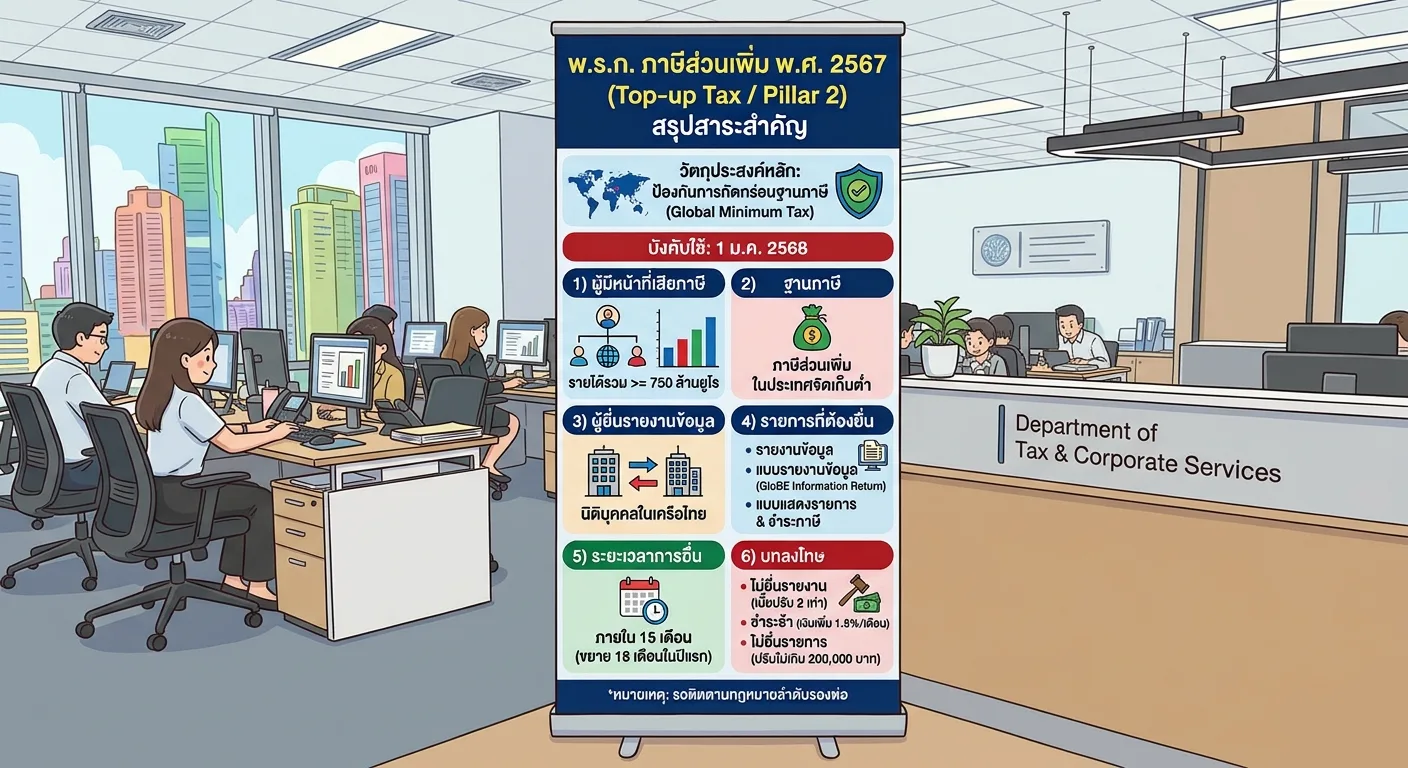
Summary of the Land and Building Tax: 3 Key Changes This Year and Strategies for Land Management to Reduce Tax Liability
Landowners, take note! Why has your tax assessment doubled this year? If you have received a P.D.S. 6 or P.D.S. 7 tax notification form, this is a must-read! A CFP® expert breaks down the three key changes to land tax this year, explains how to challenge an incorrect assessment, and offers solutions to reduce the tax burden on vacant or unused land.
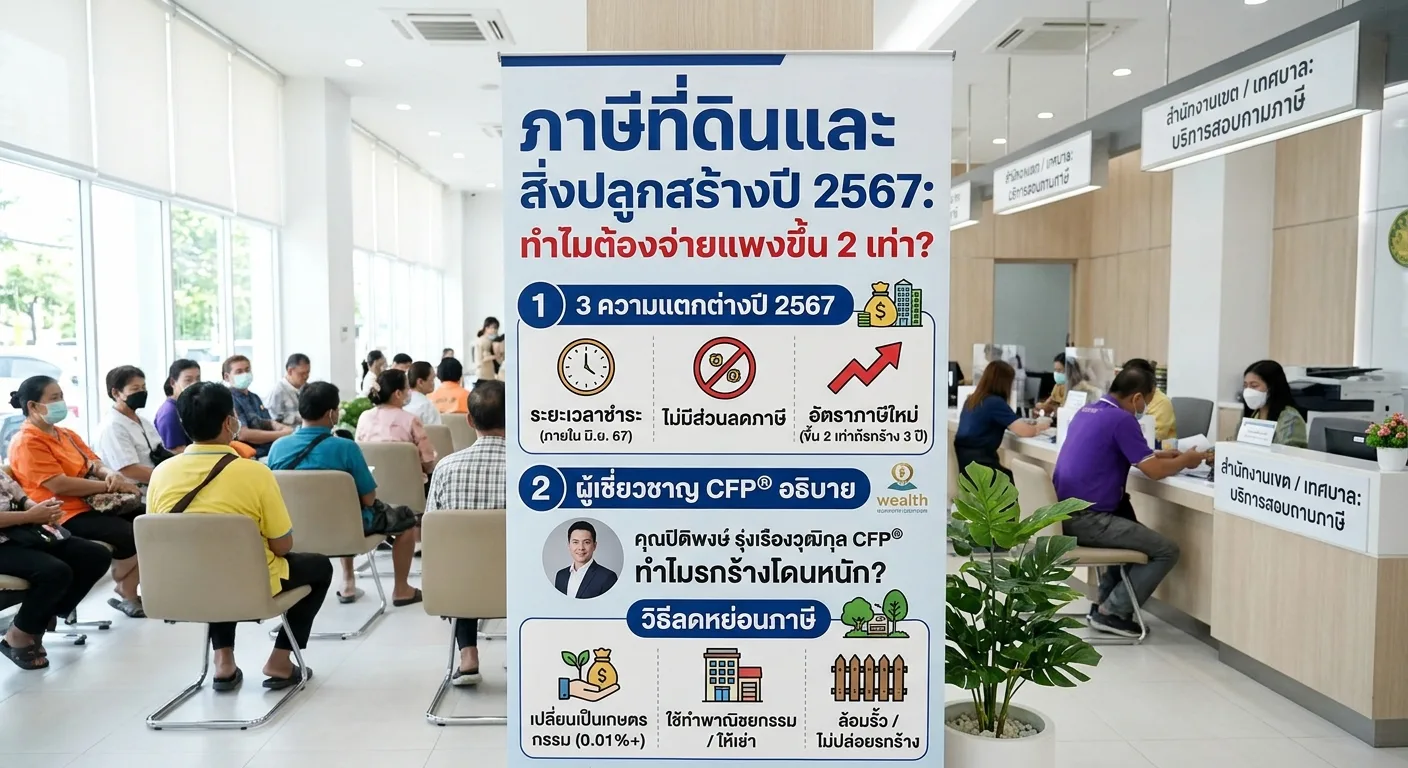
Landowners, take note! Here are 3 key changes to this year’s land tax—and why your tax bill might have doubled.
If you own real estate, land, or buildings and have recently received a tax assessment notice (forms P.D.S. 6 and P.D.S. 7), you might be surprised to find that your tax liability is significantly higher than in previous years.
Pitipong Rungruangwuttikul, CFP®, a financial planning expert at Wealth Creation International Investment Advisory Security Co., Ltd., outlines 3 major changes and offers guidance on how to manage your land tax burden.
📌 3 Key Updates to Land and Building Tax You Need to Know
1. Tax Payment Deadline Returns to Normal
Payment period: The deadline has reverted to the standard schedule—by the end of June (Note: Some areas may offer an extension until July).
2. No Tax Discounts
This is the first year that no government tax discounts—which were available in previous periods—are being offered. Consequently, the actual amount of tax due has increased.
3. Vacant Land Left Unused for 3 Consecutive Years Faces a Tax Hike!
Years 1–3 (for vacant land valued at up to 50 million THB): Tax is applied at a base rate of 0.3% (3,000 THB per 1 million THB of value).
After 3 consecutive years of being left vacant: An additional 0.3% tax is applied, bringing the total to 0.6% (6,000 THB per 1 million THB of value)—effectively doubling the tax! If left vacant: The tax rate will increase by an additional 0.3% every three years (up to a maximum of 3%).
❓ What should you do if the tax amount is incorrect?
If you receive a tax assessment notice and believe the amount is wrong—or if the information regarding how the land is being used is inaccurate—you may file an objection by following these steps:
Contact the District Office or the local Municipality where the property is located.
Submit a formal objection regarding the tax assessment or the collection of land and building tax (using form ภ.ด.ส. 10).
Officials will conduct an on-site inspection to verify the actual use of the land. If it is confirmed that the land is being utilized and is not left vacant or abandoned, the officials will correct the tax amount accordingly.
💡 Legal ways to reduce land tax
If you own vacant land and wish to lower your annual tax burden, you can consider the following two approaches to change how the land is used:
Option 1: Convert the land for "agricultural use" (the lowest tax rate).
Tax rate: Starts at just 0.01% (100 THB per 1 million THB of value) for the first 75 million THB of the land's value.
Requirements: You must engage in crop cultivation or livestock farming in accordance with the criteria specified in the joint notification from the Ministry of Finance and the Ministry of Interior (regarding criteria for land use for agricultural purposes).
Caution: This option is not suitable for land covered in concrete or stone, nor for remote properties that you cannot visit or maintain—as allowing weeds to overgrow and the land to become abandoned again would negate this status. ...which would result in having to pay taxes at a higher rate.
Option 2: Convert the land for "commercial use / rental / fencing" (an option for those with limited time)
Tax rate: Starts at 0.3% (3,000 baht per 1 million baht of value)
Pros: Although the tax rate is higher than that for agricultural land, it is not subject to the periodic tax increases (every 3 years) that apply to vacant or abandoned land.
Recommended approach: Develop the land for rental purposes, or improve the site and install a proper perimeter fence to ensure it is no longer considered vacant or abandoned land.